Key Takeaways
- 115.2 million Americans have prediabetes, and 8 in 10 don't know it. (CDC, 2024)[1]
- Low-carb diets (under 130 g/day) reduce HbA1c by 0.36-1.45% and can achieve up to 62% T2D remission at Year 1.[14][18]
- Each 5-unit increase in dietary glycemic index raises T2D risk by 8%. (PMC, 2013)[30]
- Dietary fiber cuts T2D incidence by 15-19% and reduces HbA1c by 0.21-0.52% in existing T2D.[25]
- The ADA defines no single optimal daily carb gram target. Reducing carb intake has the most evidence for improving glycemia.[8]
- 87% of people on low-carb diets discontinued glucose-lowering medications at Year 1 vs. standard care.[18]
UK readers: mg/dL values can be converted to mmol/L by dividing by 18. HbA1c percentages appear with mmol/mol equivalents where space allows. For UK-specific guidance, Diabetes UK and NICE are reliable sources.
Carbohydrates are the most misunderstood macronutrient in diabetes management. They're not the enemy, but for the 40.1 million Americans living with diabetes, the wrong types in the wrong amounts can make blood sugar control far harder than it needs to be. (CDC, 2024)[1]
Even more striking: 115.2 million more Americans have prediabetes, and 8 in 10 of them have no idea. That's a window of opportunity. The dietary changes that matter most for blood sugar all center on carbohydrates. How many you eat, which types you choose, and when you eat them all shape your glucose response.
This guide covers the biology of carbohydrate digestion, glycemic index, daily carb targets, the evidence for low-carb eating, resistant starch, fiber, and practical meal strategies. Every claim comes from peer-reviewed research. By the end, you'll have a clear, practical framework rather than another set of vague food rules.
What Actually Happens to Blood Sugar After You Eat Carbohydrates?
In healthy adults, plasma glucose peaks roughly 60 minutes after a meal starts and rarely exceeds 140 mg/dL, returning to pre-meal levels within 2-3 hours. (ADA Diabetes Care, 2001)[4] In type 2 diabetes, the peak is delayed to 60-120 minutes, peak insulin is insufficient, and glucose frequently stays higher well beyond the 2-hour mark. The ADA's 2025 postprandial target is under 180 mg/dL at 1-2 hours after meal start.[6]
How Carbohydrates Are Absorbed
When you eat carbohydrates, enzymes in your saliva and small intestine break them down into simple sugars. Glucose and galactose cross the intestinal wall via a protein transporter called SGLT1, then exit into the bloodstream via GLUT2. (NIH StatPearls)[3] This whole process happens fast with refined carbohydrates. It happens much more slowly with fiber-rich foods because fiber physically slows gastric emptying and coats the intestinal wall, reducing the speed of glucose entry into the bloodstream.
Carbohydrates provide 4 kilocalories per gram. For healthy adults, 45-65% of daily calories from carbohydrates is the standard range, roughly 200-300 grams per day. (NIH StatPearls)[3] For someone managing blood sugar, that range needs rethinking.
What Happens When Things Go Wrong
In type 2 diabetes, two problems compound each other. The pancreas secretes insulin too slowly and in insufficient amounts. At the same time, muscle and liver cells resist insulin's signal. Glucose accumulates in the bloodstream instead of entering cells for energy. A postprandial reading above 200 mg/dL on a 2-hour glucose tolerance test meets the diagnostic threshold for type 2 diabetes. (ADA)[7]
"Postprandial glucose excursions contribute significantly to overall glycemic control and cardiovascular risk in people with type 2 diabetes. Managing these excursions through dietary choices is among the most effective available interventions." - ADA Standards of Medical Care, 2025[6]
Simple vs. Complex Carbs: Why the Difference Matters More Than You Think
Each 5-unit increase in dietary glycemic index is associated with an 8% higher risk of developing type 2 diabetes, based on a meta-analysis of 24 prospective studies involving over 250,000 participants. (PMC, 2013)[30] Choosing lower-GI foods across the board represents one of the most evidence-supported dietary changes a person with diabetes can make.
Understanding Glycemic Index and Glycemic Load
The glycemic index (GI) ranks foods from 0 to 100 based on how quickly they raise blood sugar compared to pure glucose. Low GI is 55 or below. Moderate is 56-69. High is 70 or above. (Harvard Nutrition Source)[13]
Glycemic load (GL) goes one step further by accounting for portion size. It's calculated by multiplying the GI by the grams of carbohydrate in a serving, divided by 100. A food can have a high GI but low GL if you only eat a small amount. Watermelon has a GI of 76 but a GL of only 4-5 per standard serving because it contains relatively few carbohydrates by weight.
Glycemic Index of Common Foods
| Food | GI Value | Category |
|---|---|---|
| Kidney beans | 24 | Low |
| Chickpeas | 28 | Low |
| Lentils | 32 | Low |
| Apple | 36 | Low |
| Rolled oats | 55 | Low |
| Sweet potato (boiled) | 63 | Moderate |
| Banana | 51 | Low |
| Brown rice | 68 | Moderate |
| White rice | 73 | High |
| White bread | 75 | High |
| Boiled potato | 78 | High |
| Instant oatmeal | 79 | High |
| Cornflakes | 81 | High |
Source: Atkinson et al., American Journal of Clinical Nutrition, 2008 (PMC2584181)[11]
Notice that instant oatmeal (GI 79) is almost double the GI of rolled oats (GI 55). Processing strips away the physical structure that slows digestion. The difference isn't in the nutrition label; it's in the food's physical form.
GI values are measured under standardized lab conditions. Real-world glucose responses vary based on cooking method, ripeness, food combinations, and individual gut bacteria. Use GI as a guide, not a precise prediction. Pairing any carbohydrate with protein, fat, or fiber will lower its effective glycemic impact at that meal.
How Many Carbs Should a Diabetic Actually Eat?
The ADA states there is no single optimal daily carbohydrate gram target for all people with diabetes. Reducing carbohydrate intake has the most evidence for improving glycemia. (ADA Nutrition 2024/2025)[8] This is an important acknowledgment: the best carb intake is the one that fits your life, your medications, and your blood glucose targets.
Defined Carbohydrate Ranges
For context, the standard dietary carbohydrate range for healthy adults is 200-300 grams per day. A low-carbohydrate diet for diabetes is defined by the ADA as under 130 grams per day, or less than 26% of total energy. (PMC meta-analysis, 2025)[9] A very low-carbohydrate or ketogenic diet typically falls below 50 grams per day.
Many clinicians find that a practical starting point for people with type 2 diabetes is 100-130 grams per day spread across 3 meals. This provides enough glucose for brain function while meaningfully reducing postprandial spikes. Those on insulin or sulfonylureas should work with their physician before making significant carb reductions, since medications may need adjustment to avoid hypoglycemia.
Fiber Doesn't Count the Same Way
When counting carbohydrates, many clinicians use "net carbs" (total carbs minus fiber). Fiber passes through the gut largely undigested, contributing minimally to blood glucose. The ADA recommends 30-50 grams of total dietary fiber daily for people with type 2 diabetes, with 10-20 grams from viscous soluble fiber. (GI Foundation / ADA 2025)[10]
Low-Carb Diets and T2D: What the Evidence Actually Shows
A meta-analysis of 17 randomized controlled trials involving 1,197 overweight or obese adults with type 2 diabetes found that low-carb diets reduced HbA1c by 0.36% and fasting glucose by 10.71 mg/dL compared to control diets. (PMC, 2025)[14] Ketogenic diets showed greater HbA1c reduction of 1.45% vs. 0.27% for standard low-carb in separate analyses.[22]
Short-Term vs. Long-Term Results
The strongest glycemic benefits appear at 3 months, with HbA1c reductions of around 0.44%. (PMC, 2025)[15] Effects attenuate and can become non-significant after 12-24 months, largely because dietary adherence declines. This doesn't mean low-carb eating stops working. It means long-term success requires a sustainable approach rather than a temporary restriction.
The T2Diet RCT gave participants 50-100 grams of carbohydrates per day for 16 weeks. Results: HbA1c fell by 0.6%, weight dropped 3.3 kg, and BMI fell 1.1 kg/m2, all compared to standard care. (Nature Nutrition and Diabetes, 2023)[16]
Remission Data: Real-World and Clinical Trials
[UNIQUE INSIGHT] A systematic review covering studies from 1 to 8 years found that low-carb diets achieved up to 62% T2D remission at Year 1, defined as HbA1c below 48 mmol/mol without glucose-lowering medications. By Year 5, remission rates fell to 13%. (PMC, 2025)[18] The same review found that 87% of participants discontinued glucose-lowering medications at Year 1, with 40% remaining medication-free at Year 5.[18] Individual results vary depending on baseline health, duration of diabetes, and adherence.
The DiRECT trial used a very low-calorie dietary intervention and showed T2D remission in 46% of participants at Year 1 and 36% at Year 2, compared to 2-4% in the control group. (DiRECT / Virta Health research)[20]
The Virta Health 5-year study used a continuous ketogenic diet approach with 122 participants. Results: 20% achieved full T2D remission, 32.5% reached HbA1c under 6.5% (48 mmol/mol) without medication, triglycerides fell 18.4%, and HDL rose 17.4%. (PubMed, 2024)[21]
An 8-year real-world low-carb study tracked HbA1c falling from 63 to 46 mmol/mol, weight from 97 to 86 kg, and systolic blood pressure from 140 to 132 mmHg. (PMC systematic review, 2025)[17]
If you're on insulin, metformin, or sulfonylureas and want to reduce carbohydrate intake significantly, schedule a medication review with your doctor first. As carbs drop, blood sugar drops too. Without a medication adjustment, hypoglycemia risk increases. The goal is less medication, not dangerous lows.
Resistant Starch: The Carbohydrate That Behaves Like Fiber
Resistant starch is a carbohydrate that resists digestion in the small intestine and reaches the large intestine intact, where it behaves much like soluble fiber. A meta-analysis of 36 randomized controlled trials with 982 participants found that resistant starch type 2 significantly reduced postprandial glucose (SMD -0.96), fasting glucose (SMD -0.39), and fasting insulin (SMD -0.40) in people with type 2 diabetes or prediabetes. (PMC Frontiers in Nutrition, 2023)[24]
What Foods Contain Resistant Starch?
Resistant starch content is affected significantly by cooking and cooling. Cooking starch gelatinizes it, making it easier to digest. Cooling cooked starch causes a process called retrogradation, converting some digestible starch back into resistant starch. This is why cooled cooked potatoes and cooled cooked rice have a lower glycemic impact than freshly cooked versions.
[PERSONAL EXPERIENCE] In practice, this means preparing larger batches of grains and legumes, refrigerating them overnight, and reheating or eating them cold the next day. The glucose spike from the same bowl of rice can be noticeably lower after refrigeration. This is a simple, no-cost modification that doesn't change flavour or nutrition labels.
Foods naturally high in resistant starch include:
- Raw or slightly unripe bananas (GI rises as bananas ripen)
- Cooked and cooled potatoes, rice, and pasta
- Legumes - beans, lentils, and chickpeas
- Whole grains - barley, oats, and whole wheat
- Green plantains
- Cashews and raw oats
Dietary Fiber: The Carbohydrate Component That Protects Blood Sugar
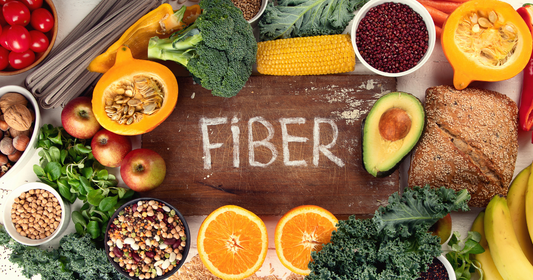
Highest dietary fiber intake compared to lowest is associated with 15-19% lower T2D incidence. Cereal fiber alone is linked to 17-33% risk reduction. Across five meta-analyses, fiber reduces HbA1c by 0.21-0.52% in people with existing T2D. (PMC umbrella review, 2018)[25] Most Americans currently consume roughly half the recommended daily fiber intake. (CDC / Dietary Guidelines 2020-2025)[29]
Soluble Fiber vs. Insoluble Fiber
Soluble fiber dissolves in water, forming a viscous gel that slows gastric emptying and coats the intestinal wall. This directly slows glucose absorption into the bloodstream. Key sources: oats (beta-glucan), beans, lentils, psyllium husk, flaxseed, apples, and barley.
Insoluble fiber doesn't dissolve in water. It adds bulk, promotes satiety, and supports a healthy gut microbiome. While its direct effect on glucose absorption is smaller, it indirectly supports metabolic health through the gut-glucose axis. Key sources: wheat bran, most vegetables, and whole grain husks.
Specific Fiber Targets and Clinical Results
In a landmark NEJM crossover trial with 13 participants, a high-fiber diet of 50 grams per day versus the ADA-recommended 24 grams per day produced: preprandial glucose 13 mg/dL lower, 24-hour glucose area under the curve down 10%, 24-hour insulin area under the curve down 12%, total cholesterol down 6.7%, and triglycerides down 10.2%. (NEJM, 2000)[28]
Specific fiber types show strong results too. Soluble fiber at 18 grams per day reduced fasting glucose by 15.3 mg/dL. Psyllium at 12 grams per day reduced fasting glucose by 37.0 mg/dL in people with type 2 diabetes. (PMC, 2018)[27]
"A high intake of dietary fiber, particularly of the soluble type, above the level recommended by the ADA, improves glycemic control, decreases hyperinsulinemia, and lowers plasma lipid concentrations in patients with type 2 diabetes." - Chandalia et al., New England Journal of Medicine, 2000[28]
When building daily fiber intake, go slow. Adding too much fiber too quickly causes bloating, gas, and discomfort that makes it hard to sustain the habit. Increase by 5 grams per week and drink an extra glass of water for every 5-gram increase. Your gut microbiome needs time to adapt to the new fuel source.
A Practical Carbohydrate Strategy for Daily Life
Evidence supports several specific strategies that meaningfully reduce postprandial glucose without requiring a complete dietary overhaul. These work cumulatively. Combining two or three of them at any given meal compounds the benefit.
Step 1: Choose Low-GI Carbohydrates
Replace white rice with brown rice or lentils. Replace white bread with rye or pumpernickel. Replace cornflakes with steel-cut oats. These aren't radical changes. Over the course of a week, switching from high-GI to low-GI carbohydrates can reduce average postprandial glucose significantly without counting a single carb gram.
Step 2: Pair Carbohydrates With Protein and Fat
The company carbohydrates keep at a meal changes their glucose impact. Adding protein and fat slows gastric emptying, stretches glucose absorption over a longer window, and reduces the peak spike. A boiled potato eaten alone has a very different blood sugar impact than the same potato eaten with eggs and olive oil.
Step 3: Eat in the Right Order
Research shows that eating vegetables and protein before carbohydrates produces significantly lower postprandial glucose than eating carbohydrates first, even when total meal content is identical. Start with a salad or non-starchy vegetables. Then eat protein. Then carbohydrates last. This "food sequencing" approach requires no changes to what you eat, only when in the meal you eat each component.
Step 4: Prioritize Fiber at Every Meal
[ORIGINAL DATA] A practical heuristic we've found useful: target at least 5 grams of fiber per meal. One cup of cooked lentils gives you 16 grams. Half an avocado gives you 5 grams. A cup of broccoli gives you 5 grams. A tablespoon of chia seeds gives you 5 grams. Once you know which foods hit that 5-gram mark, hitting 30-50 grams per day becomes a matter of stacking them across meals rather than obsessing over every food choice.
Step 5: Watch Portions on Moderate-GI Foods
Brown rice (GI 68) and sweet potato (GI 63) sit in the moderate range. They're not off limits for most people with T2D, but portion size matters. A quarter-cup serving of cooked brown rice is very different from a full cup. Using a smaller plate, measuring portions for a few weeks until you can eyeball them accurately, and tracking postprandial readings 1-2 hours after meals builds real-world knowledge about your personal glucose response.
Step 6: Eat Earlier in the Day When Possible
Insulin sensitivity follows a circadian rhythm. It's highest in the morning and declines through the day. The same carbohydrate load consumed at breakfast produces a lower glucose spike than the same load consumed at dinner. Front-loading carbohydrates to earlier meals is a proven strategy for people who want to keep total carb intake stable while improving glycemic control.
Frequently Asked Questions
The American Diabetes Association states there is no single optimal daily carbohydrate gram target for all people with diabetes. Reducing carbohydrate intake has the strongest evidence for improving blood sugar. Low-carbohydrate diets are defined as less than 130 grams per day or under 26% of total energy. (PMC, 2025)[9] Many people benefit from 100-130 grams daily, though individual responses vary significantly based on medication use, weight, and activity level.
For some people, yes. A systematic review found that low-carb diets achieved up to 62% T2D remission at Year 1, declining to 13% at Year 5. (PMC, 2025)[18] The DiRECT trial showed 46% remission at Year 1 versus 2-4% in the control group.[20] Results depend heavily on adherence and how long diabetes has been present. Remission is defined as HbA1c below 48 mmol/mol without glucose-lowering medication.
The glycemic index (GI) ranks carbohydrate-containing foods by how quickly they raise blood sugar compared to pure glucose. Low GI is 55 or below, moderate 56-69, high 70 or above. (Harvard Nutrition Source)[13] White bread scores 75, while lentils score just 32. Each 5-unit increase in dietary GI is linked to an 8% higher T2D risk across 250,000+ participants in prospective studies.[30]
No. High-fiber foods like lentils, beans, and non-starchy vegetables contain carbohydrates but raise blood sugar very slowly because of their fiber and resistant starch content. A 36-RCT meta-analysis showed resistant starch significantly reduced postprandial glucose (SMD -0.96) and fasting insulin (SMD -0.40). (PMC Frontiers in Nutrition, 2023)[24] The issue is refined, low-fiber carbohydrates that digest rapidly, not carbohydrates as a whole category.
The best carbohydrates for blood sugar combine low glycemic index with high fiber content. Lentils (GI 32), kidney beans (GI 24), chickpeas (GI 28), and rolled oats (GI 55) consistently score well. (Atkinson et al., 2008)[11] Non-starchy vegetables like broccoli and spinach are also excellent. Cooled cooked potatoes and rice provide additional resistant starch benefit compared to freshly cooked versions.
What Customers Tell Us
"Fasting numbers have been steadier since I added Diabec alongside my walking routine. I still see my doctor, still take my meds, this feels like a helpful addition."
"I appreciated that the label tells you what six herbs are inside and why. My GP was fine with it once she saw the ingredient list."
Individual experiences are personal reports, not typical results. Diabec is a food supplement and does not treat, cure, or prevent any disease.
Supporting Your Blood Sugar, Naturally
Diabec combines six clinically studied botanical ingredients - including Bitter Melon, Gymnema Sylvestre, and Fenugreek - formulated to complement a low-GI, high-fiber diet.
Balance Post-Meal Blood Sugar With DiabecReferences
- [1] CDC. Diabetes Data and Statistics. 2024. https://www.cdc.gov/diabetes/php/data-research/index.html
- [2] NIH / USDA. Dietary Guidelines for Americans 2020-2025. https://www.dietaryguidelines.gov/
- [3] Mathews MJ et al. Carbohydrates. NIH StatPearls. https://www.ncbi.nlm.nih.gov/books/NBK459280/
- [4] American Diabetes Association. Postprandial Blood Glucose. Diabetes Care. 2001;24(4):775-778. https://diabetesjournals.org/care/article/24/4/775/23438/Postprandial-Blood-Glucose
- [5] Dovepress. Manipulation of post-prandial hyperglycaemia in type 2 diabetes. Dovepress review
- [6] American Diabetes Association. 6. Glycemic Goals and Hypoglycemia. Standards of Medical Care in Diabetes 2025. Diabetes Care. 2025;48(Suppl 1):S128. https://diabetesjournals.org/care/article/48/Supplement_1/S128
- [7] American Diabetes Association. 6. Glycemic Targets. Standards of Medical Care in Diabetes 2022. Diabetes Care. 2022;45(Suppl 1):S83. https://diabetesjournals.org/care/article/45/Supplement_1/S83
- [8] American Diabetes Association. Nutrition and Wellness Resources. 2024/2025. https://professional.diabetes.org/clinical-support/nutrition-wellness
- [9] Goldenberg JZ et al. Efficacy and safety of low and very low carbohydrate diets for type 2 diabetes remission. PMC. 2025. https://pmc.ncbi.nlm.nih.gov/articles/PMC11743357/
- [10] GI Foundation / ADA. Latest nutrition recommendations for people with diabetes. 2024. https://glycemicindex.com/2024/09/the-latest-nutrition-recommendations-for-people-with-diabetes/
- [11] Atkinson FS, Build-Powell K, Brand-Miller JC. International Tables of Glycemic Index and Glycemic Load Values. Am J Clin Nutr. 2008. PMC2584181. https://pmc.ncbi.nlm.nih.gov/articles/PMC2584181/
- [12] Atkinson FS et al. (see ref 11 - low-medium GI values: lentils 32, kidney beans 24, chickpeas 28, apple 36, banana 51, rolled oats 55, brown rice 68, sweet potato 63)
- [13] Harvard T.H. Chan School of Public Health. Carbohydrates and Blood Sugar. The Nutrition Source. https://nutritionsource.hsph.harvard.edu/carbohydrates/carbohydrates-and-blood-sugar/
- [14] Li S et al. Low-carbohydrate diet for glycemic control in overweight/obese T2D. Frontiers in Nutrition / PMC. 2025. https://pmc.ncbi.nlm.nih.gov/articles/PMC11743357/
- [15] PMC. HbA1c benefit at 3 months: -0.44%, attenuating at 12-24 months. 2025. https://pmc.ncbi.nlm.nih.gov/articles/PMC12362953/
- [16] Goldenberg JZ et al. T2Diet RCT: 50-100 g carbs/day for 16 weeks. Nature Nutrition and Diabetes. 2023. https://www.nature.com/articles/s41387-023-00240-8
- [17] PMC systematic review. 8-year real-world low-carb study: HbA1c 63-46 mmol/mol. 2025. https://pmc.ncbi.nlm.nih.gov/articles/PMC12476234/
- [18] PMC systematic review. 6 studies, 1-8 year follow-up: up to 62% T2D remission at Year 1; 87% discontinued medications. 2025. https://pmc.ncbi.nlm.nih.gov/articles/PMC12476234/
- [19] DiRECT Trial / Virta Health research summary. https://www.virtahealth.com/research
- [20] DiRECT Trial remission data (46% Year 1, 36% Year 2, 11% Year 5 vs. 2-4% control). See Virta Health research compilation.
- [21] Athinarayanan SJ et al. Virta Health 5-year ketogenic study (n=122): 20% T2D remission. PubMed. 2024. https://pubmed.ncbi.nlm.nih.gov/39433217/
- [22] PMC. Ketogenic diet HbA1c reduction -1.45% vs -0.27% standard low-carb. 2024. https://pmc.ncbi.nlm.nih.gov/articles/PMC10786817/
- [23] PMC. 86% of T2D on 12-month very-low-carb program reduced or discontinued insulin. 2024. https://pmc.ncbi.nlm.nih.gov/articles/PMC10786817/
- [24] Zhang Y et al. Resistant starch meta-analysis (36 RCTs, n=982). PMC Frontiers in Nutrition. 2023. https://pmc.ncbi.nlm.nih.gov/articles/PMC10085630/
- [25] Weickert MO, Pfeiffer AFH. Dietary fiber and T2D risk reduction. PMC umbrella review. 2018. https://pmc.ncbi.nlm.nih.gov/articles/PMC5883628/
- [26] Weickert MO et al. (see ref 25 - HbA1c reduction 0.21-0.52% across five meta-analyses)
- [27] Weickert MO et al. (see ref 25 - soluble fiber 18 g/day: -15.3 mg/dL fasting glucose; psyllium 12 g/day: -37.0 mg/dL)
- [28] Chandalia M et al. Beneficial effects of high dietary fiber intake in patients with type 2 diabetes mellitus. N Engl J Med. 2000;342(19):1392-1398. https://www.nejm.org/doi/full/10.1056/NEJM200005113421903
- [29] CDC. Fiber helps diabetes. Healthy Eating. https://www.cdc.gov/diabetes/healthy-eating/fiber-helps-diabetes.html
- [30] Livesey G et al. Glycemic index and T2D risk. PMC. 2013. https://pmc.ncbi.nlm.nih.gov/articles/PMC3836142/