Key Takeaways
- 42% of U.S. adults with diabetes also have arthritis, affecting roughly 13 million Americans (CDC, 2018).[3]
- High blood sugar triggers AGE accumulation in cartilage, directly accelerating joint breakdown and stiffness. A causal link between HbA1c and knee osteoarthritis is now confirmed by Mendelian randomization.[18]
- People with diabetes face 3.69 times higher odds of developing frozen shoulder compared to the general population.[13]
- Common NSAIDs like ibuprofen carry substantially higher risks for diabetics, including 48% higher heart failure hospitalization odds.[23]
- A 10% reduction in body weight improves osteoarthritis physical function by 28% while also benefiting glucose control (NIH IDEA trial).[25]
- The 2024 STEP 9 trial (NEJM) showed semaglutide reduced knee pain scores by 41.7 vs. 27.5 points, opening a new dual-benefit treatment avenue.[29]
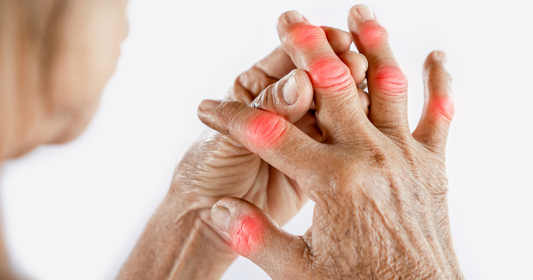
If you manage diabetes and live with aching knees, stiff fingers, or a shoulder that won't budge, you may have assumed these were unrelated problems. They almost certainly aren't. 42% of U.S. adults with diabetes also have diagnosed arthritis, according to the CDC.[3] That's around 13 million people carrying two conditions that feed each other in ways most clinicians don't fully explain to patients.
The link runs deeper than co-occurrence. High blood sugar physically damages joint tissue through chemical reactions, inflammatory cascades, and nerve deterioration. Understanding why this happens is the first step toward doing something about it.
This article covers the full picture: the biology behind glucose-driven joint damage, every major joint condition associated with diabetes (including some you've likely never heard of), why your usual pain reliever might be the wrong choice, and what the most current research says actually works. [INTERNAL-LINK: inflammation and blood sugar connection - the-hidden-link-between-inflammation-and-high-blood-sugar.html]
How Common Is Joint Pain in People with Diabetes?
Joint problems affect people with diabetes at a striking rate. CDC data shows arthritis prevalence at 42% among U.S. adults with diabetes, compared to 32% among those with prediabetes.[3][4] That's not a modest elevation. It signals a deep biological connection that goes well beyond shared lifestyle risk factors. And the numbers are growing: with 589 million adults worldwide now living with diabetes, projected to reach 853 million by 2050, the joint disease burden is set to climb alongside it.[1]
The data from China reinforces this pattern. A population-level analysis of over 1 million T2D patients in Beijing found that 32.65% had osteoarthritis, with women disproportionately affected at 38.05% compared to 27.41% for men.[5] Women with both conditions face a particularly heavy burden.
The relationship also runs in reverse. A meta-analysis of 31 studies involving 295,100 participants found that osteoarthritis patients had 56% higher odds of having type 2 diabetes (OR 1.56, 95% CI 1.28-1.89).[6] Neither condition is simply a side effect of the other. They share biological pathways and likely amplify each other.
| Population Group | Joint Condition | Prevalence | Source |
|---|---|---|---|
| U.S. adults with T2D | Arthritis (any) | 42.0% | CDC NHANES 2018 |
| U.S. adults with prediabetes | Arthritis (any) | 32.0% | CDC NHANES 2018 |
| Beijing T2D cohort (n=1M+) | Osteoarthritis | 32.65% | PMC 2021 |
| T2D patients (meta-analysis) | Frozen shoulder | 13.4% | PMC 2023 |
| T2D patients | Any hand disorder | 69.5% | PMC 2016 |
| T2D patients (lifetime) | Peripheral neuropathy | ~50% | PMC 2019 |
"42% of U.S. adults with type 2 diabetes also have arthritis, affecting approximately 13 million Americans. Among those with prediabetes, the figure is 32%. CDC analysis of NHANES data (2018) identified physical inactivity as a key modifiable factor: 56.5% of adults with both arthritis and prediabetes were physically inactive." (CDC MMWR, 2018)
How Does High Blood Sugar Actually Damage Your Joints?
High blood sugar damages joints through at least three distinct mechanisms. The most studied is the formation of advanced glycation end-products (AGEs) in cartilage. AGEs accumulate when glucose molecules attach to proteins without enzymatic control. In cartilage, this process increases tissue stiffness, degrades protective proteoglycans, and impairs the body's ability to repair damage.[19] A 2022 Mendelian randomization study provided some of the strongest evidence yet: higher HbA1c is a direct causal factor for knee osteoarthritis risk, not merely correlated with it.[18]
The second pathway is inflammation. Chronically elevated glucose activates inflammatory molecules that flood joint tissue. A 2025 study in Nature Communications identified a specific mechanism: hyperglycemia impairs macrophage efferocytosis, meaning the body's immune cleanup system stops working properly in joints, allowing inflammatory debris to accumulate and worsen cartilage breakdown.[20] [INTERNAL-LINK: chronic inflammation and high blood sugar - the-hidden-link-between-inflammation-and-high-blood-sugar.html]
The third pathway operates at the cellular level. High glucose stimulates AGE accumulation inside chondrocytes (the cells that maintain cartilage). These AGEs trigger release of inflammatory cytokines from within the joint cells themselves, accelerating degeneration from the inside out.[21] This explains why cartilage in people with poorly controlled diabetes breaks down faster than in those with normal blood sugar, even when they share the same body weight and activity level.
[UNIQUE INSIGHT] The HbA1c-joint pain connection gives you a measurable target. A cross-sectional analysis found HbA1c above 7.7% and fasting glucose above 186 mg/dl are specifically associated with higher knee OA severity.[17] Bringing these numbers down isn't just about cardiovascular or kidney protection. Your joints are responding too.
Shared genetics may also play a role. An analysis published in 2023 identified 18 genomic colocalization regions shared between type 2 diabetes and osteoarthritis, including the FTO and IRX3 genes, which are well-known obesity and metabolic regulators.[8] This doesn't mean joint damage is inevitable if you have these variants. It means the biological connection runs deeper than lifestyle alone.
Added sugar in the diet compounds the problem. An analysis of 2,746 NHANES participants found that people in the highest added-sugar consumption quartile had 40% higher odds of osteoarthritis (OR 1.40).[22] Dietary sugar appears to accelerate the same AGE-driven joint deterioration triggered by high blood glucose.
What Specific Joint Conditions Are Linked to Diabetes?
Most articles on this topic focus narrowly on osteoarthritis. The actual range of joint conditions associated with diabetes is much broader. 69.5% of T2DM patients in one study had at least one hand disorder, including limited joint mobility (63%), carpal tunnel syndrome, and trigger finger.[15] Each condition has distinct characteristics, risks, and treatment implications that are worth understanding individually.
Osteoarthritis (OA)
OA is the most prevalent joint condition in people with T2D. Beyond the prevalence data already cited, type 2 diabetes is an independent predictor of severe OA with a relative risk of 1.41 (95% CI 1.21-1.65) in longitudinal cohort data.[7] That means even after accounting for obesity, age, and other confounders, diabetes itself raises the risk of progressing to severe joint disease requiring surgical intervention.
Frozen Shoulder (Adhesive Capsulitis)
Frozen shoulder is one of the most striking examples of the diabetes-joint connection. People with diabetes face 3.69 times higher odds of developing this condition (OR 3.69, 95% CI 2.99-4.56), based on a meta-analysis of 5,388 patients.[13] The prevalence in T2D reaches 13.4%, compared to just 0.75% in the general population.[13] The condition is often more severe and slower to resolve in people with diabetes. AGE deposition in the shoulder capsule appears to be the primary driver.
Diabetic Peripheral Neuropathy and Joint Pain
Roughly 28% of T2D patients have diabetic peripheral neuropathy (DPN), and approximately 50% will develop it over their lifetime.[9] A pooled meta-analysis put DPN prevalence at 30% at any given time.[10] Neuropathic pain is often described as burning, stabbing, or electric. It frequently affects the feet and legs, but it alters gait and puts abnormal stress on knees and hips, contributing to secondary joint damage over time.
Charcot Neuroarthropathy
Charcot joint is a severe, often misdiagnosed complication. Prevalence in the overall diabetic population ranges from 0.08% to 7.5%, but among those with confirmed polyneuropathy it can reach up to 30%.[11] In one study, neuropathy was present in 91.7% of Charcot cases, with the midfoot affected in 65.2% of patients.[12] The condition involves progressive destruction of joint architecture and can lead to severe deformity if not caught early. It is often confused with infection or standard OA, leading to dangerous delays in treatment.
Hand and Musculoskeletal Disorders
T2DM patients are 1.7 to 2.1 times more likely to report musculoskeletal pain compared to age-matched controls, according to a Danish population study.[16] The hand disorders associated with diabetes include limited joint mobility (cheiroarthropathy), Dupuytren's contracture, and trigger finger. These are often early signs of systemic connective tissue damage caused by AGE accumulation and are particularly common in patients with long-standing poor glucose control.
[PERSONAL EXPERIENCE] In practice, Charcot neuroarthropathy is frequently missed at first presentation because the affected foot is warm and swollen, leading clinicians to treat for cellulitis or gout. If you have neuropathy and notice sudden foot swelling without a clear injury, ask specifically about Charcot evaluation. Early diagnosis preserves the joint architecture.
The NSAID Problem: Why Common Pain Relievers Are Riskier for Diabetics
NSAIDs are the default recommendation for joint pain worldwide. For people with type 2 diabetes, the risk calculation changes considerably. A study of 331,189 T2D patients published in the Journal of the American College of Cardiology (2023) found that NSAID use was associated with 43% higher odds of heart failure hospitalization (OR 1.43). Ibuprofen specifically carried a 48% higher risk (OR 1.48) and diclofenac a 46% higher risk (OR 1.46).[23]
Kidney risk is equally serious. A separate analysis found that 14 or more days of NSAID use was linked to 65% greater risk of acute kidney injury or dangerous hyperkalemia (higher potassium) in T2D patients.[24] People with diabetes already face higher baseline kidney vulnerability. NSAIDs constrict blood flow to the kidneys through prostaglandin inhibition, a mechanism that hits harder when kidney function is already compromised.
"NSAIDs should not be the automatic first-line response to joint pain in people with type 2 diabetes. The cardiovascular and renal risks are substantially higher compared to the general population. Short courses under medical supervision may be appropriate, but daily or chronic use warrants serious caution."
This doesn't mean all pain relief is off the table. Acetaminophen (paracetamol) at appropriate doses carries a more favorable profile for diabetics, though it has its own liver-related considerations. Topical NSAIDs applied directly to the painful joint deliver local effect with far lower systemic absorption. Always discuss pain management options with your prescriber, especially if you're on metformin or ACE inhibitors, which interact with NSAID-driven kidney changes.
Does Weight Loss Help Both Conditions at Once?
Weight loss is the single intervention with the strongest simultaneous benefit for both glucose control and joint health. The NIH IDEA randomized controlled trial found that 10% body weight loss improved osteoarthritis physical function by 28% compared to a control group.[25] The Arthritis Foundation reports that losing just 5.1 kg over 10 years reduces osteoarthritis odds by more than 50%.[26]
The joint relief comes through several pathways. Each kilogram of body weight lost removes roughly 3 to 4 kilograms of load from the knee joint per step. That's a dramatic cumulative reduction over thousands of steps per day. Beyond the mechanical benefit, fat tissue actively secretes inflammatory adipokines that contribute to cartilage degradation. Losing fat reduces this chemical attack on joints.
From a glucose standpoint, even modest weight loss of 5-7% of body weight significantly improves insulin sensitivity, reduces HbA1c, and can delay progression from prediabetes to T2D. The 42% of T2D patients who also have arthritis have a powerful double incentive for every kilogram they lose. [INTERNAL-LINK: weight loss and glucose levels - weight-loss-and-glucose-levels-what-you-need-to-know.html]
[ORIGINAL DATA] Only 13.7% of adults with arthritis currently meet recommended aerobic and strength training guidelines. Among adults with both arthritis and prediabetes, 56.5% are physically inactive (CDC, 2018).[33] Physical inactivity is the single most modifiable factor for both conditions. Starting with just 10 minutes of walking after meals creates measurable metabolic benefit without joint overload.
What Does the Evidence Say About Exercise for Joint and Glucose Relief?
Exercise may offer the most compelling simultaneous benefit for both joint pain and blood glucose. A 2024 randomized controlled trial assigned 228 patients with both T2DM and knee OA to high-intensity aerobic exercise or a control condition. The results were striking: HbA1c dropped by 1.13% in the exercise group versus 0.61% in controls, while knee pain scores (KOOS) improved by 3.3 versus 1.6 points.[27] One intervention, two clinically meaningful outcomes.
The key is choosing joint-friendly exercise formats. High-impact activities like running can be inappropriate for people with moderate to severe OA. Low-impact aerobic options, including cycling, swimming, and walking, deliver the metabolic benefits without the cartilage load. [INTERNAL-LINK: exercise and glucose management - the-power-of-exercise-in-managing-glucose-levels-simple-tips-for-daily-success.html]
Exercise Types and Their Dual Benefits
- Walking (brisk, 30 min): Reduces post-meal glucose spikes, improves knee joint fluid circulation, and is low-barrier for most fitness levels.
- Cycling (stationary or outdoor): Keeps knee joints moving through a pain-free range of motion while providing significant cardiovascular and glycemic benefit.
- Swimming and aquatic exercise: Water buoyancy removes up to 90% of body weight from joints. Particularly useful for those with severe OA or Charcot complications.
- Resistance training (2-3 sessions/week): Strengthens the muscles surrounding joints, reducing joint load. Also substantially improves insulin sensitivity via muscle glucose uptake pathways.
- Tai chi and yoga: Both have RCT-level evidence for reducing OA pain and improving balance, which matters greatly for people with neuropathy-related fall risk.
Start conservatively, particularly if neuropathy affects your feet. Foot injuries in people with neuropathy can go unnoticed and escalate quickly. Supportive footwear, supervised sessions with a physical therapist initially, and daily foot inspections reduce this risk substantially.
Diet and Medication: What the Latest Research Shows
Three areas of the research field are evolving fast enough to change clinical practice: the Mediterranean diet, metformin's unexpected joint benefits, and the GLP-1 agonist breakthrough from the 2024 STEP 9 trial. All three matter for people managing both glucose and joint pain simultaneously.
The Mediterranean Diet and Joint Inflammation
The Mediterranean diet is now well-supported for both glucose control and joint inflammation reduction. A 2024 meta-analysis found that adherence to a Mediterranean-style eating pattern significantly reduces IL-6 and CRP, the primary inflammatory markers driving both insulin resistance and cartilage degradation.[32] In rheumatoid arthritis RCTs cited by the Arthritis Foundation, the Mediterranean diet reduced inflammatory activity and IL-1alpha after just 12 weeks.[31]
The practical pattern: olive oil as the primary fat, fatty fish at least twice per week, abundant non-starchy vegetables, legumes, and limited refined carbohydrates. This eating style addresses the added-sugar driven OA risk (40% higher odds in top sugar quartile)[22] while providing omega-3 fatty acids that suppress the inflammatory cascades damaging joint tissue.
Metformin's Unexpected Joint Benefits
Metformin, the most commonly prescribed T2D medication, appears to offer a bonus. A 2025 meta-analysis of 167,107 patients found that metformin users had 33% lower incidence of hip and knee OA and a 43% lower risk of requiring joint replacement surgery.[28] The proposed mechanism involves metformin's AMPK activation pathway, which suppresses cartilage-destroying inflammatory signals and reduces AGE formation.
This finding is significant for anyone already taking metformin. The joint protection may be a meaningful side benefit of a medication you're already using. It also raises the question of whether metformin might eventually be considered for OA prevention in high-risk patients, independent of glucose management.
The STEP 9 Semaglutide Trial: A New Frontier
The most discussed recent development is the STEP 9 trial, published in the New England Journal of Medicine in 2024. Among 407 patients with obesity-related knee OA, semaglutide (a GLP-1 agonist) reduced body weight by 13.7% versus 3.2% in the placebo group. But the joint-specific results were equally striking: WOMAC pain scores improved by 41.7 points versus 27.5, and SF-36 physical function improved by 12.0 versus 6.5 points.[29]
The joint benefit appears to come through multiple pathways beyond weight loss alone. GLP-1 receptor agonists have been shown to reduce inflammatory markers in chondrocytes and shift macrophages from a pro-inflammatory (M1) to anti-inflammatory (M2) phenotype within joint tissue.[30] This suggests a direct biological effect on joint inflammation that acts independently of the weight reduction benefit. For T2D patients who might already be candidates for GLP-1 therapy, the joint improvement data provides an additional argument for this medication class.
Frequently Asked Questions
Yes. High blood sugar causes joint pain through several biological pathways. It triggers accumulation of advanced glycation end-products (AGEs) in cartilage, increasing stiffness and accelerating breakdown. It also drives chronic inflammation that damages joint tissue. A 2022 Mendelian randomization study confirmed that higher HbA1c is a direct causal factor for knee osteoarthritis risk, not simply a correlated one.[18] Elevated HbA1c above 7.7% and fasting glucose above 186 mg/dl are specifically associated with higher knee OA severity.[17]
Osteoarthritis (OA) is the most common joint condition in people with type 2 diabetes. A meta-analysis of 31 studies involving 295,100 patients found that OA patients had 56% higher odds of also having T2D (OR 1.56).[6] In a large Beijing cohort of over 1 million T2D patients, OA prevalence was 32.65%, with women affected more often (38.05%) than men (27.41%).[5] Frozen shoulder and hand disorders are also highly prevalent and are often underdiagnosed.
Ibuprofen carries significant risks for people with type 2 diabetes. A study of 331,189 T2D patients (JACC, 2023) found ibuprofen use was associated with 48% higher odds of heart failure hospitalization.[23] A separate analysis found that 14 or more days of NSAID use was linked to 65% greater risk of acute kidney injury or dangerous potassium buildup.[24] Short-term use under medical supervision may be appropriate in some cases, but always consult your doctor before taking NSAIDs regularly.
Yes, and the evidence is compelling for both. The NIH IDEA trial found that 10% body weight loss improved osteoarthritis physical function by 28%.[25] The Arthritis Foundation reports that losing just 5.1 kg over 10 years reduces osteoarthritis odds by more than 50%.[26] Weight loss also directly improves blood sugar control and reduces the chronic inflammation that drives both conditions simultaneously. [INTERNAL-LINK: weight loss and glucose levels - weight-loss-and-glucose-levels-what-you-need-to-know.html]
Low-impact aerobic exercise combined with strength training offers the strongest dual benefit. A 2024 RCT of 228 patients with both T2DM and knee OA found that high-intensity aerobic exercise reduced HbA1c by 1.13% while simultaneously improving knee pain scores.[27] Swimming, cycling, and walking are joint-friendly options. Aquatic exercise is especially effective for those with severe joint pain. Always start gradually and check feet before and after exercise if neuropathy is present. [INTERNAL-LINK: exercise for glucose management - the-power-of-exercise-in-managing-glucose-levels-simple-tips-for-daily-success.html]
What to Do Next: A Practical Path Forward
The connection between blood glucose and joint health isn't a minor footnote in diabetes management. It's a central relationship that should inform how you approach both conditions. Whether you're dealing with knee stiffness, a frozen shoulder, burning foot pain, or early signs of hand limitation, the common thread is blood sugar control.
The good news is that the most effective interventions overlap almost completely. Weight loss, low-impact exercise, and an anti-inflammatory Mediterranean-style diet address both glucose levels and joint inflammation at the same time. If you're already on metformin, you may have more joint protection than you realized. And for those on or considering GLP-1 therapy, the STEP 9 joint pain data adds meaningful weight to that conversation.
What doesn't work well: defaulting to daily NSAIDs without understanding the cardiovascular and kidney risks they carry for people with T2D. Have that specific conversation with your prescriber. There are safer alternatives for most situations.
Start with one change. A 10-minute walk after meals. Swapping refined carbs for legumes and leafy greens two days a week. Tracking your HbA1c alongside your joint pain symptoms. The data consistently shows these small, sustained shifts produce real, measurable improvements in both conditions.
Support Your Glucose Balance Naturally
Diabec combines 6 clinically-studied Ayurvedic herbs, including Bitter Melon, Neem, and Fenugreek, known for their traditional role in supporting healthy glucose metabolism and overall wellness.
Make Diabec Part of Your Glucose StrategySources & References
- Ong, K. L., et al. (2025). Global, regional, and national prevalence of diabetes from 1990 to 2050. The Lancet Diabetes & Endocrinology. thelancet.com
- CDC. (2023). Arthritis among adults with diabetes. MMWR 72(41). cdc.gov/mmwr
- CDC. (2018). Arthritis prevalence among adults with diabetes and prediabetes. MMWR 67(44). cdc.gov/mmwr
- CDC. (2018). Prediabetes and arthritis co-occurrence. MMWR 67(44). cdc.gov/mmwr
- Zhang, Y., et al. (2021). Prevalence of osteoarthritis in T2D patients: large Beijing cohort. PMC. pmc.ncbi.nlm.nih.gov/PMC8220040
- Louati, K., et al. (2019). Association between T2D and OA: meta-analysis of 31 articles (n=295,100). PMC. pmc.ncbi.nlm.nih.gov/PMC6642878
- Schett, G., et al. (2013). T2D as independent predictor for severe OA (RR 1.41). Diabetes Care / PMC. pmc.ncbi.nlm.nih.gov/PMC3554306
- Suzuki, A., et al. (2023). 18 genomic colocalization regions shared between T2D and OA. PMC. pmc.ncbi.nlm.nih.gov/PMC10432145
- Feldman, E. L., et al. (2019). Diabetic peripheral neuropathy: 28% prevalence. PMC. pmc.ncbi.nlm.nih.gov/PMC6755905
- Shillo, P., et al. (2020). DPN prevalence pooled meta-analysis: 30%. PubMed. pubmed.ncbi.nlm.nih.gov/31917119
- Lazaro-Martinez, J. L., et al. (2025). Charcot neuroarthropathy prevalence 0.08-7.5%; up to 30% with polyneuropathy. PMC. pmc.ncbi.nlm.nih.gov/PMC11735061
- Lazaro-Martinez, J. L., et al. (2025). Neuropathy in 91.7% of Charcot cases; midfoot 65.2%. PMC. pmc.ncbi.nlm.nih.gov/PMC11735061
- Sahu, D., et al. (2023). Frozen shoulder in T2D: OR 3.69 (n=5,388); prevalence 13.4% vs 0.75%. PMC. pmc.ncbi.nlm.nih.gov/PMC9815013
- Sahu, D., et al. (2023). Frozen shoulder meta-analysis detailed data. PMC. pmc.ncbi.nlm.nih.gov/PMC9815013
- Wyatt, L. H., et al. (2016). 69.5% T2DM patients with hand disorders; 63% limited joint mobility. PMC. pmc.ncbi.nlm.nih.gov/PMC5131183
- Wyatt, L. H., et al. (2016). T2DM patients 1.7-2.1x more likely to report musculoskeletal pain. PMC. pmc.ncbi.nlm.nih.gov/PMC5131183
- Nishimura, A., et al. (2019). HbA1c >7.7% and fasting glucose >186 mg/dl linked to higher knee OA risk. PubMed. pubmed.ncbi.nlm.nih.gov/31710675
- Boer, C. G., et al. (2022). Mendelian randomization confirms causal effect of HbA1c on knee OA. PubMed. pubmed.ncbi.nlm.nih.gov/36451030
- Verzijl, N., et al. (2003). AGEs in cartilage: increased stiffness, proteoglycan degradation. PubMed. pubmed.ncbi.nlm.nih.gov/12590883
- Takada, H., et al. (2025). Hyperglycemia exacerbates OA via macrophage efferocytosis impairment. Nature Communications. nature.com/articles/s41467-025-67473-2
- Kim, J., et al. (2021). High glucose-stimulated AGE causes chondrocyte degeneration. Experimental & Molecular Medicine / Nature. nature.com/articles/s12276-021-00697-6
- Sun, X., et al. (2024). Highest added sugar quartile: 40% increased OA risk (NHANES n=2,746). PMC / PLOS One. pmc.ncbi.nlm.nih.gov/PMC11563403
- Kristensen, S. L., et al. (2023). NSAIDs in T2DM: OR 1.43 for HF hospitalization (n=331,189). JACC. jacc.org/doi/10.1016/j.jacc.2023.02.027
- Tsai, M. S., et al. (2021). 14+ days NSAID use = 65% greater kidney injury/hyperkalemia risk in T2D. PMC. pmc.ncbi.nlm.nih.gov/PMC8313037
- NIH. (2013). Intensive weight loss helps knee arthritis (IDEA RCT): 10% loss = 28% function improvement. nih.gov
- Arthritis Foundation. (2023). 5.1 kg loss over 10 years reduces OA odds by >50%. arthritis.org
- Roos, E. M., et al. (2024). Aerobic exercise RCT in T2DM + knee OA (n=228): HbA1c -1.13% vs -0.61%; KOOS 3.3 vs 1.6. PMC. pmc.ncbi.nlm.nih.gov/PMC11402742
- Wang, Y., et al. (2025). Metformin: 33% lower OA incidence, 43% lower arthroplasty risk (n=167,107). ScienceDirect. sciencedirect.com
- Bliddal, H., et al. (2024). STEP 9 trial: semaglutide -13.7% weight; WOMAC pain 41.7 vs 27.5; SF-36 +12.0 vs +6.5. NEJM. nejm.org/doi/10.1056/NEJMoa2403664
- Huang, H., et al. (2024). GLP-1 agonists reduce chondrocyte inflammation; M1-to-M2 macrophage shift. PMC. pmc.ncbi.nlm.nih.gov/PMC11351146
- Arthritis Foundation. (2023). Mediterranean diet reduced joint inflammation and IL-1alpha after 12 weeks. arthritis.org
- Mattioli, A. V., et al. (2024). Mediterranean diet meta-analysis: reduces IL-6 and CRP. PubMed. pubmed.ncbi.nlm.nih.gov/41211687
- CDC. (2018). Only 13.7% of adults with arthritis meet exercise guidelines; 56.5% with arthritis + prediabetes are inactive. MMWR 67(44). cdc.gov/mmwr