Key Takeaways
- Almonds have the strongest clinical evidence for blood sugar support, with clinical trials reporting reduced fasting glucose and HbA1c.[1]
- Walnuts are uniquely rich in plant-based omega-3 (ALA), which helps reduce inflammation linked to insulin resistance.[5]
- A daily handful of nuts (about 1 oz / 28 g) provides meaningful amounts of magnesium, fiber, and healthy fats that slow glucose absorption.
- Pistachios offer a built-in portion control advantage because shelling them slows eating speed and reduces calorie intake.[7]
- Avoid candied, honey-roasted, or chocolate-covered nuts, which can contain 8-12 grams of added sugar per serving and negate blood sugar benefits.
- Nut butters can be equally effective, but only when made from nuts alone, without added sugars or hydrogenated oils.[15]
If you are looking for a simple, satisfying snack that genuinely supports healthy blood sugar, you would be hard-pressed to find a better option than nuts.
Nuts are one of the few foods that check nearly every box for glucose management: they are high in healthy fats, rich in fiber, packed with magnesium, low in digestible carbohydrates, and slow to raise blood sugar. Multiple large-scale studies and clinical trials have linked regular nut consumption to improved glycemic control and reduced risk of type 2 diabetes.[2]
But not all nuts are created equal, and the way you eat them matters too. This guide breaks down which nuts offer the most benefit, how they work to lower blood sugar, and practical ways to incorporate them into your daily routine.
Why Nuts Are So Good for Blood Sugar
Before diving into specific varieties, it helps to understand why nuts as a category are particularly beneficial for glucose control. There are four key mechanisms at work:
1. Healthy fats slow glucose absorption
Nuts are predominantly made of monounsaturated and polyunsaturated fats, with very little saturated fat. When you eat fat alongside carbohydrates, it slows gastric emptying, meaning food moves through your digestive system more gradually. This prevents the sharp blood sugar spikes that occur when carbohydrates are digested quickly on their own.[3]
2. Fiber blunts the glucose response
Most nuts provide 1-3 grams of fiber per ounce. While that may not sound like much, fiber slows carbohydrate digestion and helps regulate the rate at which glucose enters the bloodstream. This is especially beneficial when nuts are eaten alongside higher-carbohydrate foods like fruit, oatmeal, or toast.[4]
3. Magnesium improves insulin sensitivity
Magnesium is one of the most important minerals for blood sugar regulation, and many people with elevated blood sugar are deficient in it. Magnesium plays a direct role in insulin signaling, helping cells respond properly to insulin so they can absorb glucose from the bloodstream. Almonds, cashews, and Brazil nuts are particularly rich sources.[6]
4. Low glycemic impact
Nuts have a very low glycemic index (GI), typically below 20, meaning they cause minimal blood sugar elevation when eaten on their own. A 2011 study in the journal Metabolism found that adding 2 ounces of mixed nuts to a white bread meal significantly reduced the post-meal glucose spike compared to white bread eaten alone.
The Best Nuts for Blood Sugar: Ranked by Evidence
1. Almonds: the strongest evidence
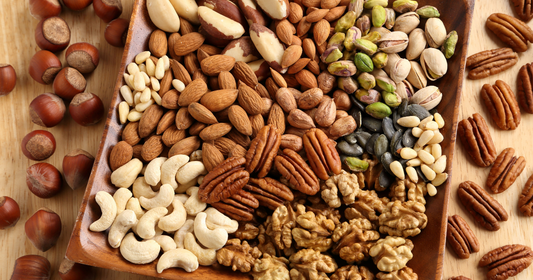
If you could pick only one nut for blood sugar management, almonds would be the top choice based on current research. Multiple randomized controlled trials have demonstrated that regular almond consumption improves glycemic markers.
A 2011 study published in Metabolism found that consuming 2 ounces of almonds daily for 12 weeks significantly reduced fasting blood sugar and fasting insulin in people with prediabetes.[1] A separate trial published in the Journal of the American College of Nutrition showed that almonds eaten with a high-glycemic meal reduced the post-meal glucose spike by up to 30%.
Per 1-ounce serving (about 23 almonds): 164 calories, 6 g protein, 14 g fat (mostly monounsaturated), 6 g carbs, 3.5 g fiber, 76 mg magnesium (19% DV).
Keep a small bag of raw almonds in your desk drawer, car, or bag. Eating 10-12 almonds about 20 minutes before a meal can help blunt the post-meal blood sugar spike. This "pre-loading" strategy is supported by research on almond pre-meal consumption and glycemic response.
2. Walnuts: the omega-3 powerhouse
Walnuts stand out from other tree nuts because they are the richest plant source of alpha-linolenic acid (ALA), an omega-3 fatty acid with well-documented anti-inflammatory properties. Since chronic inflammation is a key driver of insulin resistance, walnuts address blood sugar from a different angle than most other nuts.[5]
A study in Diabetes Care found that adding walnuts to the diet of people with type 2 diabetes improved endothelial function and reduced fasting insulin levels. The PREDIMED trial, one of the largest dietary intervention studies ever conducted, demonstrated that a Mediterranean diet supplemented with mixed nuts (including walnuts) reduced the incidence of new diabetes cases by 52% compared to a low-fat control diet.
Per 1-ounce serving (about 14 halves): 185 calories, 4 g protein, 18.5 g fat (including 2.5 g ALA omega-3), 4 g carbs, 1.9 g fiber, 45 mg magnesium.
3. Pistachios: the portion-control champion
Pistachios offer a unique advantage beyond their nutritional profile. Because you have to shell them one at a time, eating pistachios naturally slows your pace of consumption, which helps with portion control. Research has even shown that leaving the empty shells visible on your desk reduces total intake by about 41%.[7]
A 2014 randomized controlled trial published in the Review of Diabetic Studies found that consuming about 2 ounces of pistachios daily for 12 weeks significantly reduced fasting blood sugar, HbA1c, and insulin resistance in people with type 2 diabetes. Pistachios are also notably high in lutein and zeaxanthin, antioxidants that support eye health, which is particularly important for people managing blood sugar since the eyes are especially vulnerable to glucose-related damage.
Per 1-ounce serving (about 49 kernels): 159 calories, 6 g protein, 13 g fat, 8 g carbs, 3 g fiber, 34 mg magnesium.
4. Cashews: the magnesium-rich option
Cashews are slightly higher in carbohydrates than other tree nuts (about 8 g per ounce), which sometimes leads people to assume they should be avoided. In reality, cashews are an excellent source of magnesium and have been shown to support insulin sensitivity.
A 2019 study in the International Journal of Endocrinology and Metabolism found that cashew nut consumption improved markers of insulin resistance in people with type 2 diabetes. Another study in the Journal of Nutrition showed that a cashew-enriched diet reduced systolic blood pressure, a meaningful benefit since hypertension and blood sugar problems frequently coexist.
Per 1-ounce serving (about 18 cashews): 157 calories, 5 g protein, 12 g fat, 9 g carbs, 1 g fiber, 83 mg magnesium (20% DV).
5. Pecans: lowest carb, highest fiber ratio
Pecans are worth highlighting for their exceptionally low carbohydrate content and high antioxidant capacity. With only 4 grams of carbohydrates per ounce and 2.7 grams of fiber, pecans have one of the most favorable carb-to-fiber ratios of any nut. They are also among the highest-ranking foods on the ORAC antioxidant scale.
A 2018 study published in Nutrients found that adding pecans to the diet of overweight and obese adults improved insulin sensitivity and reduced markers of cardiometabolic risk. Pecans are also rich in manganese, a trace mineral involved in glucose metabolism and antioxidant defense.
Per 1-ounce serving (about 19 halves): 196 calories, 3 g protein, 20 g fat, 4 g carbs, 2.7 g fiber, 34 mg magnesium.
6. Macadamia nuts: the highest in monounsaturated fat
Macadamia nuts contain the highest percentage of monounsaturated fat of any nut, at roughly 80% of their total fat content. Monounsaturated fats have been consistently linked to improved insulin sensitivity and lower cardiovascular risk.
While there are fewer diabetes-specific studies on macadamias compared to almonds or walnuts, a study in the Journal of Nutrition found that macadamia nut consumption improved lipid profiles and reduced inflammation in hypercholesterolemic men. Their extremely low carbohydrate content (under 4 g per ounce) makes them one of the most blood sugar-friendly snack options.
Per 1-ounce serving (about 10-12 nuts): 204 calories, 2 g protein, 21 g fat (mostly monounsaturated), 4 g carbs, 2.4 g fiber, 37 mg magnesium.
7. Brazil nuts: the selenium specialist
Brazil nuts deserve a place on this list not for their fat or fiber content (which is comparable to other nuts), but for their extraordinary selenium content. A single Brazil nut provides roughly 68-91 mcg of selenium, which is more than 100% of the daily recommended intake.[10]
Selenium is an essential trace mineral that supports thyroid function and acts as a cofactor for glutathione peroxidase, one of the body's most important antioxidant enzymes. Adequate selenium status has been linked to reduced oxidative stress and improved metabolic markers. However, selenium can be harmful in excess, so limit intake to 1-3 Brazil nuts per day rather than eating them by the handful.
8. Peanuts: technically a legume, but still effective
Peanuts are not true nuts (they are legumes that grow underground), but they are commonly grouped with tree nuts and share many of the same blood sugar benefits. Peanuts are high in protein (about 7 g per ounce), rich in monounsaturated fats, and relatively affordable compared to most tree nuts.
A large prospective study published in JAMA Internal Medicine involving over 200,000 participants found that regular peanut consumption was associated with significantly lower total mortality and cardiovascular mortality. A 2014 trial in the British Journal of Nutrition showed that peanut consumption improved postprandial glucose and insulin responses in obese women at risk for type 2 diabetes.[11]
"We observed that the inclusion of peanuts in the diet significantly attenuated the glycemic response after a high-glycemic load meal, along with improvements in the lipid profile." - Reis et al., British Journal of Nutrition, 2014
How Much Should You Eat? Portion Sizes That Work
The research consistently shows that 1 to 2 ounces (28-56 grams) per day is the sweet spot for blood sugar benefits. This is roughly one small handful or about a quarter cup. That amount provides enough healthy fats, fiber, and magnesium to meaningfully impact glucose metabolism without adding excessive calories.[12]
Here is what one ounce looks like for different nuts:
- Almonds: about 23 nuts
- Walnuts: about 14 halves
- Pistachios: about 49 kernels
- Cashews: about 18 nuts
- Pecans: about 19 halves
- Macadamias: about 10-12 nuts
- Brazil nuts: about 6 nuts (but stick to 1-3 for selenium safety)
- Peanuts: about 28 nuts
A 2013 meta-analysis in PLoS ONE that pooled data from 12 clinical trials found that consuming approximately 2 ounces of tree nuts per day reduced fasting glucose by an average of 0.15 mmol/L and HbA1c by 0.07% in people with type 2 diabetes. The effect was most pronounced when nuts replaced refined carbohydrates in the diet rather than simply being added to existing intake.
Pre-portion your nuts into small reusable bags or containers (1 oz each) at the start of the week. Eating directly from a large bag or can often leads to consuming 2-3x the intended amount, which can mean an extra 300-400 calories. Pre-portioning removes the guesswork and makes grab-and-go snacking easy. Also see: Diabec's six Ayurvedic ingredients.
What About Nut Butters?
Nut butters can be just as effective as whole nuts for blood sugar management, provided you choose the right ones. The critical distinction is between natural nut butters and commercial nut butters.[15]
What to look for in a nut butter
- Ingredient list: Ideally just nuts (and maybe salt). Nothing else. If the label lists sugar, corn syrup, hydrogenated oils, or palm oil, it is not a good choice for blood sugar.
- Oil separation is a good sign: Natural nut butters separate because they do not contain emulsifiers. A layer of oil on top means it is the real thing. Just stir it in.
- Almond butter is particularly good for glucose control, offering higher fiber, magnesium, and vitamin E than peanut butter.
- Serving size: 2 tablespoons is the standard serving, providing roughly the same nutrition as 1 ounce of whole nuts.
A study in the Journal of Nutrition found that consuming peanut butter for breakfast significantly reduced blood sugar responses not only at breakfast but also after the subsequent lunch meal, a phenomenon known as the "second meal effect."
Nuts to Be Careful With (or Avoid)
The health benefits discussed throughout this article apply to raw, dry-roasted, or lightly salted nuts. The following preparations can significantly reduce or even eliminate those benefits:
Candied and sugar-coated nuts
Praline pecans, candied almonds, and cinnamon-sugar cashews are extremely popular but can contain 8-12 grams of added sugar per serving. That is the equivalent of 2-3 teaspoons of sugar, which directly raises blood sugar and largely offsets the glycemic benefits of the nut itself.
Honey-roasted varieties
Honey-roasted peanuts and cashews often seem like a healthy choice because honey is perceived as "natural." But in this context, the honey is simply another form of added sugar (typically 4-6 grams per serving), combined with added oils and starch coatings that further increase the carbohydrate load.
Chocolate-covered and yogurt-covered nuts
A serving of chocolate-covered almonds can contain 15-20 grams of sugar. Yogurt-covered nuts are often even worse, as the "yogurt" coating is primarily sugar and palm kernel oil with minimal actual dairy content.
Trail mix with dried fruit and candy
Many commercial trail mixes contain more dried fruit, chocolate chips, and candy pieces than actual nuts. A typical serving can have 15-25 grams of sugar. If you enjoy trail mix, make your own with plain nuts, seeds, and a small amount of unsweetened coconut flakes. Also see: one family member's prevention playbook.
As a simple rule: if the nut tastes sweet, check the label. The blood sugar benefits of nuts come from the nut itself, not from what has been added to it.
Practical Snack Ideas: How to Add More Nuts to Your Diet
Knowing which nuts to eat is one thing. Actually incorporating them into your daily routine consistently is another. Here are practical, research-informed strategies:
Morning
- Top your oatmeal with a tablespoon of chopped walnuts and a few sliced almonds. The added fat and protein will slow the digestion of the oats and reduce the glucose spike.
- Spread almond butter on whole grain toast instead of jam or regular butter. Pair with sliced banana for a filling breakfast.
- Add crushed pecans to plain Greek yogurt with a handful of berries. The combination of protein (yogurt), healthy fat (pecans), and antioxidants (berries) is excellent for glucose control.
Midday
- Keep a 1-ounce bag of almonds at your desk for an afternoon snack. Eating them between lunch and dinner can prevent the late-afternoon blood sugar dip that leads to sugar cravings.
- Toss walnuts into salads for crunch and staying power. Walnuts pair particularly well with leafy greens, goat cheese, and balsamic vinaigrette.
- Pair an apple with a tablespoon of natural peanut butter. The fat and protein in the peanut butter significantly slows the absorption of the fruit sugar.
Evening
- Use crushed pistachios as a coating for baked fish or chicken instead of breadcrumbs. This reduces the carbohydrate content of the coating while adding healthy fats.
- Make a simple nut-based "energy ball": Blend dates, almond butter, oats, and a pinch of cinnamon in a food processor. Roll into small balls. These satisfy sweet cravings while providing sustained energy.
- A small handful of macadamia nuts after dinner can help stabilize overnight blood sugar, thanks to their high monounsaturated fat content and very low carbohydrate load.
Mixing Nuts for Maximum Benefit
Rather than relying on a single nut variety, many nutritionists recommend eating a mix of different nuts to get the broadest range of nutrients. Each nut variety has a slightly different nutritional profile:
- Almonds for magnesium and vitamin E
- Walnuts for omega-3 ALA and polyphenols
- Pistachios for lutein, zeaxanthin, and B6
- Cashews for copper, zinc, and magnesium
- Pecans for manganese and antioxidants
- Brazil nuts for selenium (just 1-2 per day)
A large trial from the PREDIMED study group used a daily mix of walnuts, almonds, and hazelnuts and observed significant improvements in glycemic markers and cardiovascular risk factors over a multi-year follow-up period. The researchers specifically chose a mix to capture the complementary benefits of different nut types.
Common Questions and Concerns
Will nuts make me gain weight?
Despite being calorie-dense, large population studies consistently show that regular nut eaters tend to have lower body weight and less weight gain over time compared to non-nut eaters. Several factors explain this: the fiber and protein in nuts promote satiety, the body does not absorb all the calories from nuts (some fat remains trapped in the cell walls), and nuts may increase resting metabolic rate slightly.[13]
Raw versus roasted: does it matter?
Both raw and dry-roasted nuts are good choices. Roasting does reduce some heat-sensitive nutrients (particularly B vitamins and some antioxidants), but the effect is modest. The more important distinction is between dry-roasted (no added oil) and oil-roasted (fried in added vegetable oils, which increases calorie and inflammatory omega-6 content).
What about nut allergies?
If you have a tree nut allergy, seeds can provide many of the same blood sugar benefits. Pumpkin seeds, sunflower seeds, flaxseeds, and chia seeds are all rich in healthy fats, fiber, and magnesium. If you are allergic to tree nuts but not peanuts (which is common, since peanuts are legumes), peanuts remain a viable option. Always consult your allergist for personalized guidance.
The Bottom Line
Nuts are one of the simplest, most accessible, and most evidence-backed foods you can add to your diet for blood sugar support. They require no preparation, they travel well, they satisfy hunger between meals, and they pair naturally with many other blood sugar-friendly foods.
Start with a daily handful of raw or dry-roasted almonds. From there, experiment with walnuts, pistachios, and other varieties. Pair them with fruit, add them to salads and yogurt, or simply eat them on their own as an afternoon snack. The research is clear that even this one small change can make a meaningful difference in your glucose numbers over time.
The best dietary changes are the ones you can maintain. And fortunately, eating a handful of nuts every day is one of the easiest health habits you will ever adopt.
Support Your Glucose Balance Naturally
Diabec combines 6 clinically-studied Ayurvedic herbs - including Bitter Melon, Neem, and Fenugreek - known for their traditional role in supporting healthy glucose metabolism and overall wellness.
Support Healthy Blood Sugar NaturallySources & References
- Wien, M. A., Sabate, J. M., Ikle, D. N., Cole, S. E., & Kandeel, F. R. (2003). Almonds vs complex carbohydrates in a weight reduction program. International Journal of Obesity, 27(11), 1365-1372. PubMed 14574348
- Afshin, A., Micha, R., Khatibzadeh, S., & Mozaffarian, D. (2014). Consumption of nuts and legumes and risk of incident ischemic heart disease, stroke, and diabetes: a systematic review and meta-analysis. American Journal of Clinical Nutrition, 100(1), 278-288. PubMed 24898241
- Josse, A. R., Kendall, C. W., Augustin, L. S., Ellis, P. R., & Jenkins, D. J. (2007). Almonds and postprandial glycemia: a dose-response study. Metabolism, 56(3), 400-404. PubMed 17292730
- Kendall, C. W., Josse, A. R., Esfahani, A., & Jenkins, D. J. (2010). Nuts, metabolic syndrome and diabetes. British Journal of Nutrition, 104(4), 465-473. PubMed 20441672
- Ros, E. (2010). Health benefits of nut consumption. Nutrients, 2(7), 652-682. PubMed 22254047
- Barbagallo, M., & Dominguez, L. J. (2015). Magnesium and type 2 diabetes. World Journal of Diabetes, 6(10), 1152-1157. PubMed 26322160
- Honselman, C. S., Painter, J. E., Kennedy-Hagan, K. J., et al. (2011). In-shell pistachio nuts reduce caloric intake compared to shelled nuts. Appetite, 57(1), 1-4. PubMed 21745628
- Jenkins, D. J., Kendall, C. W., Banach, M. S., et al. (2011). Nuts as a replacement for carbohydrates in the diabetic diet. Diabetes Care, 34(8), 1706-1711. PubMed 21715526
- Estruch, R., Ros, E., Salas-Salvado, J., et al. (2018). Primary prevention of cardiovascular disease with a Mediterranean diet supplemented with extra-virgin olive oil or nuts. New England Journal of Medicine, 378(25), e34. PubMed 29897866
- Thomson, C. D. (2004). Assessment of requirements for selenium and adequacy of selenium status: a review. European Journal of Clinical Nutrition, 58(3), 391-402. PubMed 14985676
- Reis, C. E., Ribeiro, D. N., Costa, N. M., Bressan, J., Alfenas, R. C., & Mattes, R. D. (2013). Acute and second-meal effects of peanuts on glycaemic response and appetite in obese women with high type 2 diabetes risk. British Journal of Nutrition, 109(11), 2015-2023. PubMed 23122211
- Viguiliouk, E., Kendall, C. W., Blanco Mejia, S., et al. (2014). Effect of tree nuts on glycemic control in diabetes: a systematic review and meta-analysis of randomized controlled dietary trials. PLoS ONE, 9(7), e103376. PubMed 25076495
- Mattes, R. D., Kris-Etherton, P. M., & Build, G. D. (2008). Impact of peanuts and tree nuts on body weight and healthy weight loss in adults. Journal of Nutrition, 138(9), 1741S-1745S. PubMed 18716179
- Hernandez-Alonso, P., Camacho-Barcia, L., Bullo, M., & Salas-Salvado, J. (2017). Nuts and dried fruits: an update of their beneficial effects on type 2 diabetes. Nutrients, 9(7), 673. PubMed 28657600
- Tan, S. Y., & Mattes, R. D. (2013). Appetitive, dietary and health effects of almonds consumed with meals or as snacks: a randomized, controlled trial. European Journal of Clinical Nutrition, 67(11), 1205-1214. PubMed 24084509
- Li, S. C., Liu, Y. H., Liu, J. F., Chang, W. H., Chen, C. M., & Chen, C. Y. (2011). Almond consumption improved glycemic control and lipid profiles in patients with type 2 diabetes mellitus. Metabolism, 60(4), 474-479. PubMed 20580779
- Tapsell, L. C., Batterham, M. J., Teuss, G., et al. (2009). Long-term effects of increased dietary polyunsaturated fat from walnuts on metabolic parameters in type II diabetes. European Journal of Clinical Nutrition, 63(8), 1008-1015. PubMed 19352378
- Sauder, K. A., McCrea, C. E., Ulbrecht, J. S., Kris-Etherton, P. M., & West, S. G. (2015). Effects of pistachios on the lipid/lipoprotein profile, glycemic control, inflammation, and endothelial function in type 2 diabetes. Review of Diabetic Studies, 12(3-4), 275-286. PubMed 25396407
- Mah, E., Schulz, J. A., Kaden, V. N., et al. (2017). Cashew consumption reduces total and LDL cholesterol: a randomized, crossover, controlled-feeding trial. American Journal of Clinical Nutrition, 105(5), 1070-1078. PubMed 28404575
- Rajaram, S., Burke, K., Connell, B., Myint, T., & Sabate, J. (2001). A monounsaturated fatty acid-rich pecan-enriched diet favorably alters the serum lipid profile of healthy men and women. Journal of Nutrition, 131(9), 2275-2279. PubMed 11533268
- Garg, M. L., Blake, R. J., & Wills, R. B. (2003). Macadamia nut consumption lowers plasma total and LDL cholesterol levels in hypercholesterolemic men. Journal of Nutrition, 133(4), 1060-1063. PubMed 12672919
- Colpo, E., Vilanova, C. D., Brenner Reetz, L. G., et al. (2013). A single consumption of high amounts of the Brazil nuts improves lipid profile of healthy volunteers. Journal of Nutrition and Metabolism, 2013, 653185. PubMed 24222847
- Bao, Y., Han, J., Hu, F. B., et al. (2013). Association of nut consumption with total and cause-specific mortality. New England Journal of Medicine, 369(21), 2001-2011. PubMed 24256379
- Jiang, R., Manson, J. E., Stampfer, M. J., Liu, S., Willett, W. C., & Hu, F. B. (2002). Nut and peanut butter consumption and risk of type 2 diabetes in women. JAMA, 288(20), 2554-2560. PubMed 12444862
- Lovejoy, J. C., Most, M. M., Lefevre, M., Greenway, F. L., & Rood, J. C. (2002). Effect of diets enriched in almonds on insulin action and serum lipids in adults with normal glucose tolerance or type 2 diabetes. American Journal of Clinical Nutrition, 76(5), 1000-1006. PubMed 12399271
- Tindall, A. M., Johnston, E. A., Kris-Etherton, P. M., & Petersen, K. S. (2019). The effect of nuts on markers of glycemic control: a systematic review and meta-analysis of randomized controlled trials. American Journal of Clinical Nutrition, 109(2), 297-314. PubMed 30721903
- Pan, A., Sun, Q., Manson, J. E., Willett, W. C., & Hu, F. B. (2013). Walnut consumption is associated with lower risk of type 2 diabetes in women. Journal of Nutrition, 143(4), 512-518. PubMed 23427333
- Coates, A. M., Howe, P. R. (2007). Edible nuts and metabolic health. Current Opinion in Lipidology, 18(1), 25-30. PubMed 17212210
- Sabate, J., Oda, K., & Ros, E. (2010). Nut consumption and blood lipid levels: a pooled analysis of 25 intervention trials. Archives of Internal Medicine, 170(9), 821-827. PubMed 20458092
- Del Gobbo, L. C., Falk, M. C., Feldman, R., Lewis, K., & Mozaffarian, D. (2015). Effects of tree nuts on blood lipids, apolipoproteins, and blood pressure: systematic review, meta-analysis, and dose-response of 61 controlled intervention trials. American Journal of Clinical Nutrition, 102(6), 1347-1356. PubMed 26561616
- Guasch-Ferre, M., Bullo, M., Martinez-Gonzalez, M. A., et al. (2013). Frequency of nut consumption and mortality risk in the PREDIMED nutrition intervention trial. BMC Medicine, 11, 164. PubMed 23866098
- Kim, Y., Keogh, J. B., & Clifton, P. M. (2017). Benefits of nut consumption on insulin resistance and cardiovascular risk factors: multiple potential mechanisms of actions. Nutrients, 9(11), 1271. PubMed 29165404